The Planner as Humanist Builder
Planners are often introduced by the objects they help produce: plans, maps, housing, streets, parks, permits and policies. The list is accurate and incomplete.
The real product of planning is possibility.
A shaded path makes it possible for an older adult to walk to the store. A frequent bus makes it possible to accept a job across town. An apartment near a school makes it possible for a family to remain in a community. A bench makes it possible for strangers to share a pause. A zoning change makes possible a building that did not exist before — and a set of lives that can now unfold within it.
Seen this way, planning is not simply the arrangement of land uses. It is the construction of relationships among people, places, institutions and time.
That is what makes planning a humanist practice. Humanism begins from the worth, agency and complexity of people. It resists reducing a person to a demand unit, trip, tax parcel, risk score or public comment. It asks not only whether a system is efficient, but what the system allows people to become.
The profession already contains this obligation. The AICP Code of Ethics states that a planner's primary obligation is to serve the public interest and calls for special attention to interrelated decisions, social justice, choice and the needs of disadvantaged groups.1 The challenge is that "the public" is not a single client with a coherent brief. It includes present residents and future ones, property owners and renters, people with influence and people absent from the room. Their needs conflict. Values compete. Evidence is incomplete.
The planner is therefore neither neutral technician nor solitary visionary. The work is closer to translation, stewardship and design under moral uncertainty.
Translation means making institutions legible to residents and lived experience legible to institutions. It means explaining what a floor-area ratio does to a building while also explaining what a proposed building does to a life. Technical language should increase precision, not monopolize the conversation.
Stewardship means holding a longer time horizon than the loudest meeting. A planner must consider the child who will cross the street, the renter who may be displaced, the tree that needs decades to provide canopy, the infrastructure that future residents will inherit and the neighborhood history that a market analysis cannot price.
Design under moral uncertainty means acknowledging tradeoffs without using complexity as an excuse for inaction. A housing project may add needed homes and create displacement risk. A bike lane may improve safety and alter access for a small business. A historic designation may preserve memory and freeze exclusion. The planner's task is not to discover a solution with no cost. It is to expose the costs, expand the choices and direct public power toward a fairer result.
Maps are central to that responsibility because they decide what enters the shared field of vision. A map can clarify a network, reveal an inequity or hide one beneath aggregate data. The AC Transit assessment observes that maps can support trip planning, build network awareness, serve internal operations, communicate public priorities and perform political work.2 The lesson extends far beyond transit: every planning representation has a job, an audience and consequences.
The humanist planner asks what the representation leaves out. Does a housing map show people priced out of every available unit? Does a heat map show where riders wait? Does a public-engagement summary distinguish repeated organizational comments from the breadth of community opinion? Does a model treat time saved inside a car as more valuable than time made safer on foot?
New technology raises the stakes. Artificial intelligence can review documents, identify code conflicts, summarize comments, generate scenarios and reduce administrative delay. Used well, it can return time to public servants and make complex systems easier to navigate. Used carelessly, it can scale the biases, blind spots and procedural habits already embedded in planning.
The appropriate question is not whether AI should enter planning; it already has. The question is which judgments may be automated, which require accountable human discretion, and how residents can challenge a machine-assisted decision. Efficiency is valuable when it removes pointless friction. It is dangerous when it accelerates an unjust rule or makes responsibility harder to locate.
A humanist builder would use technology to expand civic capacity: translate materials, test alternatives, find missing information, flag unequal impacts and help residents understand how a proposal affects them. The system should make the reasoning more visible, not create a new black box around public power.
This also changes how success is measured. The completion of a plan is not an outcome. A rezoning is not an outcome. A permit is not an outcome. The outcomes are homes occupied, trips made safely, heat exposure reduced, businesses sustained, relationships preserved and choices expanded. Good planning creates feedback loops between the promise and the lived result.
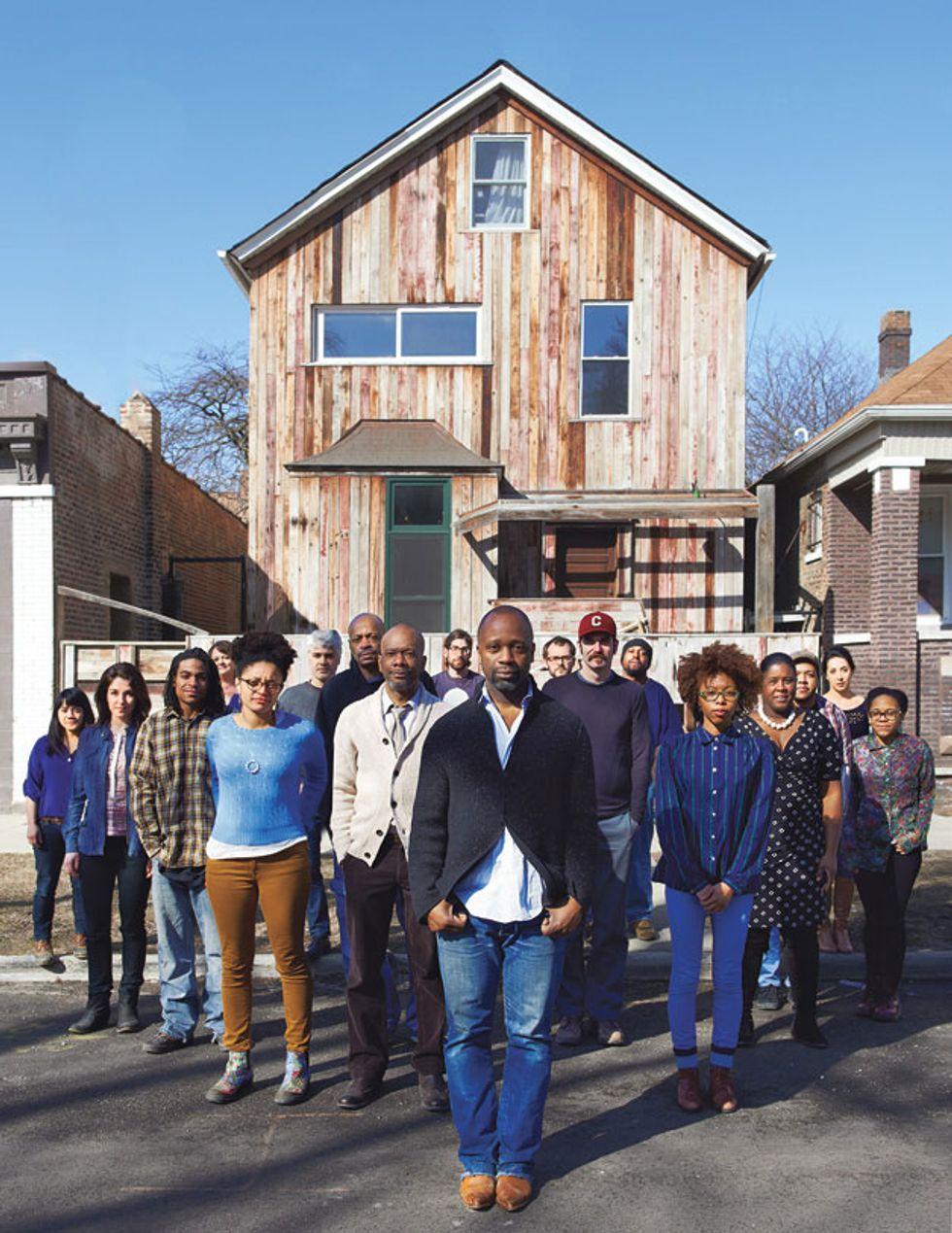
The planner as humanist builder is not a hero standing over a model city. No one person understands a place well enough for that role. The image is collaborative: residents naming what data missed, maintenance workers explaining how space actually operates, designers giving form to shared priorities, developers navigating feasibility, elected officials making accountable choices and planners holding the interfaces together.
The work is slow because democracy is slow, but not every delay is democratic. The work is technical because cities are complex, but not every technical rule is wise. The work is political because resources and burdens are distributed, but it need not be cynical.
At its best, planning is practical hope. It takes a value — dignity, freedom, belonging, safety — and gives it an address.
"At its best, planning is practical hope. It takes a value — dignity, freedom, belonging, safety — and gives it an address."← Back to The Journal