What Children See That Planners Miss
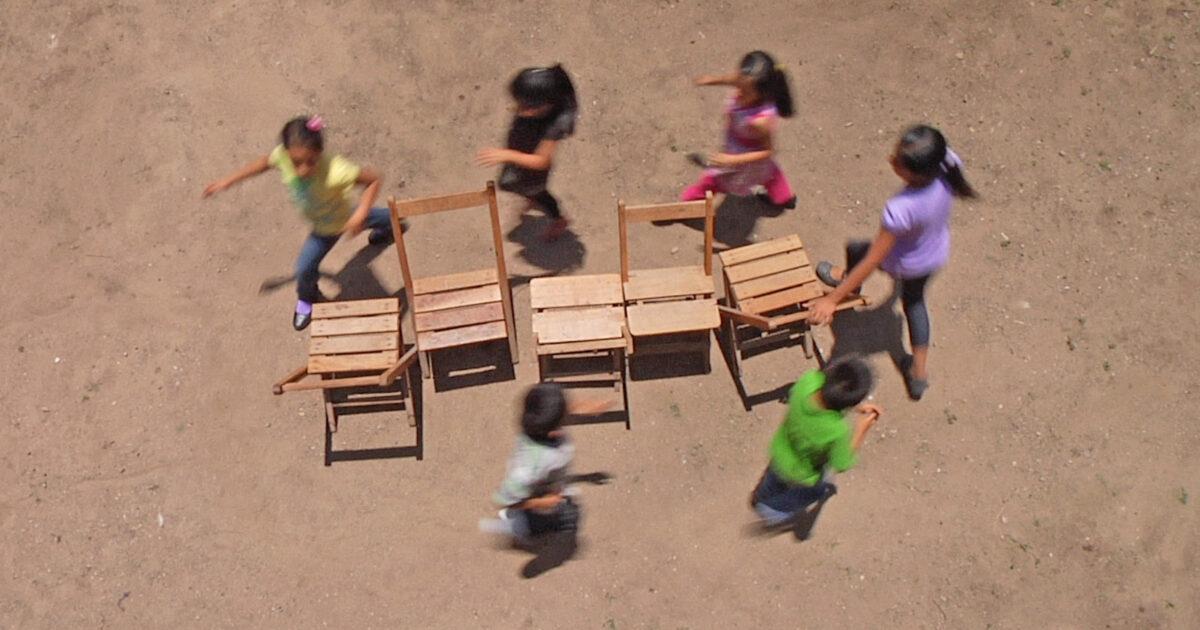
Ask an adult to map a neighborhood and the result will likely contain streets, parcels, buildings and destinations. Ask a child and the landmarks change.
Here is the wall that is good for balancing. Here is the dog that barks behind the blue fence. Here is the shortcut adults say not to use. Here is the puddle that becomes a lake after rain. Here is the corner where the cars do not stop. Here is the tree where everyone waits. Here is the place where you can be seen from home, and here is where you suddenly feel alone.
Children inhabit the same city as adults but perceive a different operating system. They move closer to the ground, travel with less power and depend on others for access. They notice texture, concealment, speed, sound and the possibility of play. What an adult experiences as a minor inconvenience — a long signal, an obstructed sightline, a missing sidewalk — can function as a hard border in a child's world.
Planning rarely begins from that perspective. Children are grouped under household demographics, school enrollment or park demand. Adults speak for them at hearings. Their daily routes appear as lines between home, school and programmed activities. The unplanned parts of childhood — wandering, inventing, watching, meeting, testing independence — are difficult to fit into a land-use category.
Yet a city that works for children tells us something fundamental about its public realm. Can a person with limited height, speed, judgment, money and authority move safely and find delight? Can a child reach friends without being driven? Is there anywhere to play that does not require a reservation, fee or organized team? Can a teenager remain in public without being treated as a problem to disperse?
UNICEF's child-responsive planning guidance emphasizes safe streets, accessible public space, play and meaningful participation by children.1 These are rights and development needs. They are also tests of whether a city distributes independence.
The decline of independent mobility is often treated as a parenting trend, but it is partly a design outcome. Wide roads, fast turns, disconnected street networks and distant destinations make supervision rational. When every useful place requires a car, a child cannot gradually earn a larger territory. The city becomes a sequence of islands connected by an adult's schedule.
Children also expose the difference between designed purpose and lived use. A low retaining wall may be seating, stage, path and balance beam. A vacant lot may be habitat and social world. A library may matter as much for warmth, bathrooms and belonging as for books. Adults see leftover space; children see affordances — invitations to do something.
That perception should influence design. Instead of concentrating play inside fenced playgrounds, cities can build playable routes: climbable edges, stepping elements, water, art, small refuges, generous sidewalks and objects that support imagination without prescribing it. Traffic calming around schools should extend beyond the front gate and account for the full network of routes children use. Parks should include spaces for teenagers, who are too often offered either equipment for small children or sports fields with rules and schedules.
Listening must be more than asking children to decorate an adult plan. Give them cameras. Walk routes with them. Ask them to mark places that feel exciting, boring, unsafe or forbidden. Let them build models and explain the social rules adults cannot see. Peterson's discussion of creative observation includes a simple insight: children notice visual details adults have trained themselves to ignore.2 That fresh attention is not cute. It is data.
The process also needs honesty. Children should know which decisions are genuinely open, what constraints exist and how their input changed the result. Nothing teaches civic cynicism faster than participation staged as a classroom activity and forgotten when the real plan is written.
Adults may fear that designing for children will make cities less efficient. The opposite is often true. Safer crossings help older adults. Slower neighborhood streets reduce severe crashes. Places for informal play support social connection. Trees, shade and public bathrooms benefit nearly everyone. A child-friendly city is not a themed environment. It is a city in which human vulnerability is expected and ordinary life has room to unfold.
Children are not merely future citizens. They are residents now. Their inability to vote or attend evening meetings makes the planning profession's responsibility greater, not smaller.
The next time a plan labels a space "underutilized," a planner should pause. Underutilized by whom? At what height? At what hour? Under whose rules?
The answer may be standing three feet lower, seeing an entire city we missed.
"Children are not merely future citizens. They are residents now."← Back to The Journal